
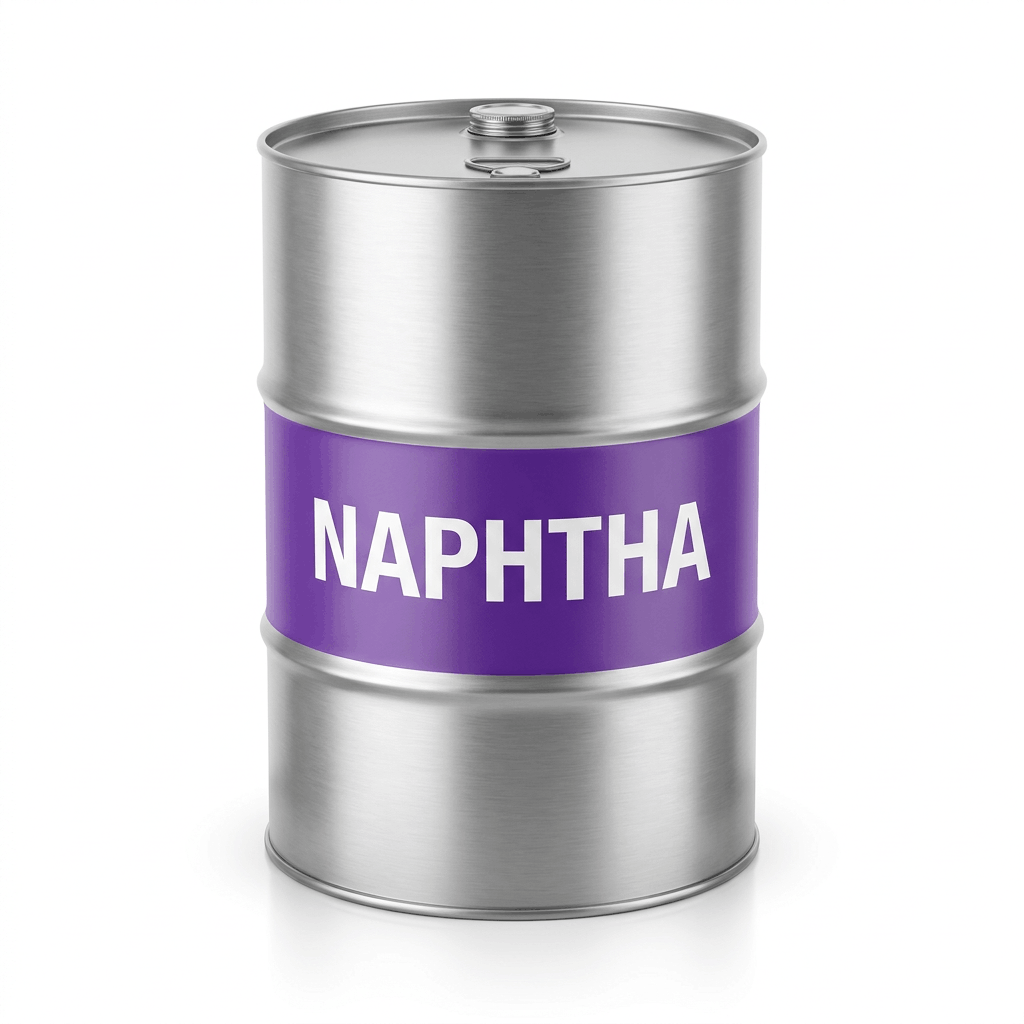
Description
Naphtha is a family of light, volatile petroleum liquids obtained during refining. It covers a range of hydrocarbon mixtures rather than one fixed product. Light and heavy naphtha grades differ in boiling range and composition, and each grade should be identified by its intended use and tested specification.
How is naphtha produced?
In a refinery, a suitable petroleum feed is heated and separated into fractions by distillation. Naphtha is recovered among the lighter liquid fractions, above the kerosene range in the column. The stream may be split into light and heavy naphtha and, where needed, treated or sent for further processing. Its composition and yield depend on the feedstock and the chosen cut points.
Raw naphtha is not finished gasoline. It may require additional processing and blending before a finished gasoline grade can be produced. Suitability as a petrochemical or solvent feedstock also depends on the buyer’s specification.
What is naphtha used for?
Depending on its grade and composition, naphtha may be used as:
- A feedstock for petrochemical production
- A feed for catalytic reforming to make high-octane gasoline components
- A component for further fuel blending or, in suitable grades, a solvent feedstock
Naphtha is highly volatile and flammable. Storage, transfer, and use must follow the product safety data sheet and the applicable facility requirements. The term “naphtha” alone does not qualify a shipment for gasoline, petrochemical, or solvent applications.
Key properties to check
- Distillation range
- Density
- Sulfur content
- Vapor pressure or volatility
- Water content and composition where required
Buyers may also specify particular limits for aromatics, olefins, or contaminants. Review the agreed specification and a recent Certificate of Analysis.
Availability & specification
Product availability and the specification of a particular naphtha grade vary by supplier. Contact our team for the grade, agreed specification, Certificate of Analysis, current pricing and handling requirements.
Technical references: U.S. Energy Information Administration — “Glossary: Naphthas”, “Refining crude oil: the refining process”, “Catalytic reforming boosts octane for gasoline blending” and “Glossary: Special naphthas”.
Reviews
There are no reviews yet.