

Description
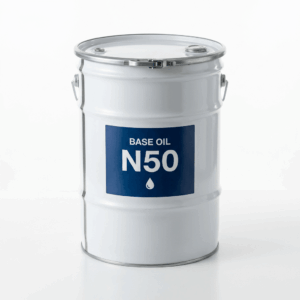
Base oil is the principal fluid used to formulate many lubricants. Manufacturers combine suitable base oils with additives to produce finished products with the required viscosity, wear protection, stability, and other performance properties. Base oils are supplied in different viscosity grades and API base-stock groups.
How is base oil produced?
Mineral base oils begin with suitable petroleum fractions from refining. Group I products are commonly made using solvent-based separation and dewaxing. Group II and Group III products generally undergo more extensive hydrogen-based processing, with Group III defined in part by a higher viscosity index. Producers then separate and test the resulting oils by viscosity grade. Synthetic base stocks follow different production routes.
Base oil is not a finished engine or hydraulic oil. Its API group and grade do not alone prove that a lubricant will meet an equipment maker’s approval — finished-lubricant performance depends on the complete formulation and testing.
What is base oil used for?
Depending on the grade and formulation, base oil is used to make:
- Automotive engine and driveline lubricants
- Hydraulic, gear, compressor and circulating oils
- Other industrial lubricants, greases and selected specialty products
Grade selection matters. Lighter grades such as N50 and N150 and heavier grades serve different blending needs. The designation alone does not establish a universal viscosity or API group; the supplier’s technical data sheet and Certificate of Analysis define the actual product.
Key properties to check
Review the following results, and the declared API group and supplier’s agreed specification, for each grade and shipment:
- Kinematic viscosity at 40°C and 100°C
- Viscosity index
- Pour point and flash point
- Color
- Sulfur and water content
Availability & specification
Product availability and the specification of a particular base oil grade vary by supplier. Contact our team for the technical data sheet, Certificate of Analysis, current pricing and available packaging.
Technical references: ExxonMobil Basestocks — “Basic Frequently Asked Questions”, “Group I Base Stocks” and “Group II Base Stocks”; U.S. Energy Information Administration — “Refining crude oil: the refining process”.

Reviews
There are no reviews yet.