
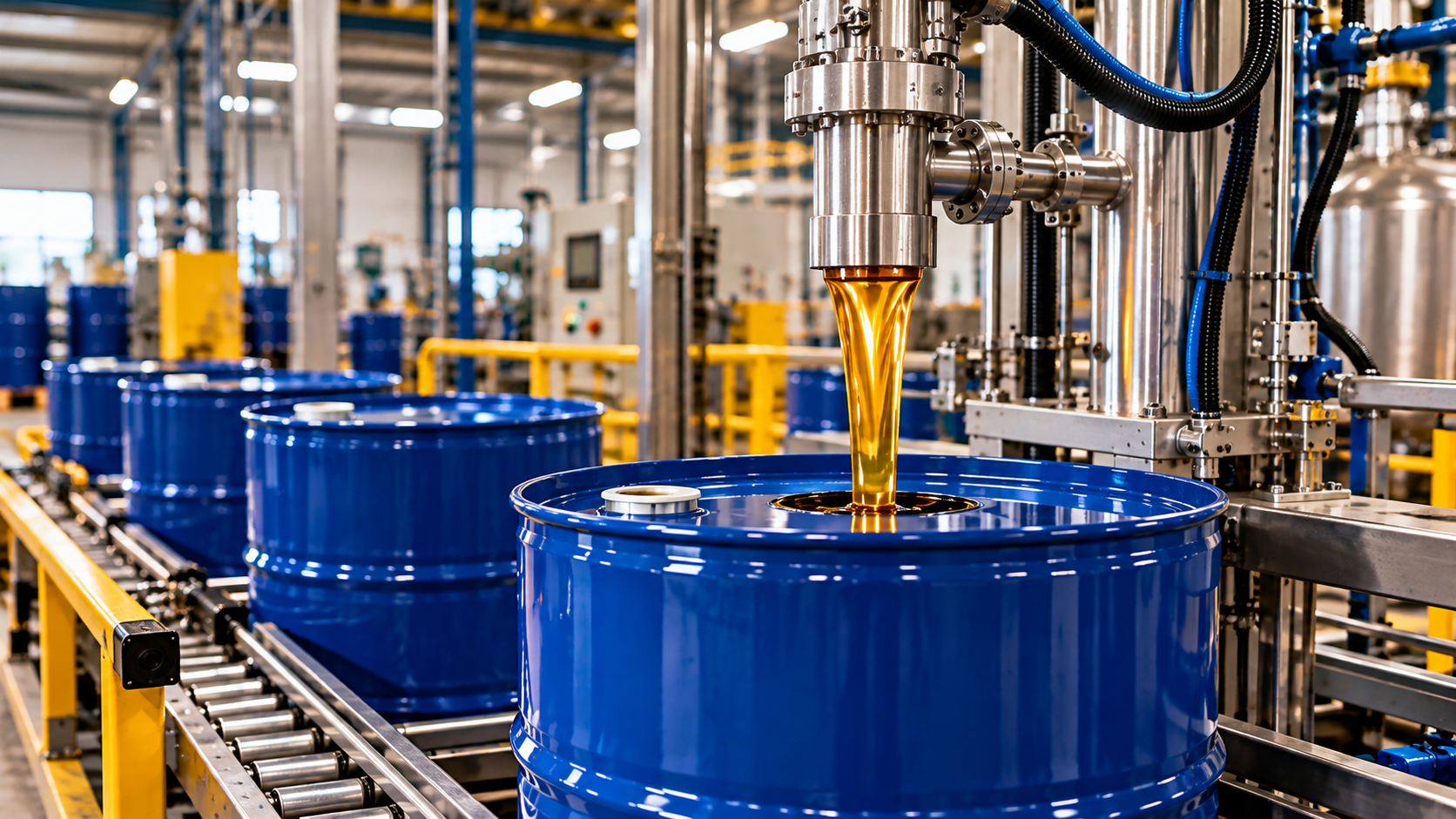
Petroleum drumming is an important process in the handling and distribution of oils, lubricants, and selected petroleum products. It involves transferring products from bulk storage or processing systems into drums for storage, transportation, and delivery to customers.
For manufacturers, distributors, and industrial suppliers, effective drumming operations help make products available in practical quantities while supporting product identification, handling, and inventory control.
A well-managed drumming process combines suitable equipment, compatible packaging, accurate filling, and appropriate safety procedures.
What Is Petroleum Drumming?
Petroleum drumming is the process of filling suitable drums with petroleum-based products, such as lubricating oils, industrial oils, and other compatible materials.
Depending on the product and customer requirements, businesses may use different drum materials, sizes, closures, and filling systems.
Drumming operations may be performed at manufacturing facilities, refineries, blending plants, or specialised packaging facilities.
Key Steps in the Drumming Process
- Preparing the drums: Containers should be checked for cleanliness, condition, compatibility, and suitability for the intended product. Damaged or unsuitable drums should not be used.
- Preparing the product: Before filling, operators should verify the product identity, batch details, and any applicable quality requirements. Transfer lines and filling equipment should be suitable for the product being handled.
- Filling and measuring: Suitable filling equipment helps operators achieve the required quantity and reduce spills or product waste. Filling procedures should account for the product’s properties and applicable container requirements.
- Sealing and labelling: After filling, drums should be securely closed and labelled according to applicable requirements. Labels may identify the product, batch number, quantity, handling precautions, and supplier information.
- Storage and dispatch: Filled drums should be stored and transported according to product-specific requirements. Appropriate handling equipment, stable stacking arrangements, and clear inventory records help reduce damage and improve warehouse efficiency.
Benefits of Efficient Drumming Operations
Convenient product distribution: Drums allow products to be supplied in manageable quantities to workshops, industrial facilities, distributors, and other customers.
Improved inventory control: Batch identification and consistent labelling help businesses track products throughout storage and distribution.
Reduced handling risks: Suitable equipment and documented procedures can reduce spills, manual-handling injuries, and packaging damage.
Flexible customer supply: Drumming can support customers who require packaged quantities rather than bulk deliveries, subject to the product and packaging arrangements available.
Safety and Quality Considerations
Petroleum drumming requires attention to product compatibility, spill prevention, ventilation where required, ignition control for applicable products, and employee training.
Facilities should maintain filling equipment, inspect containers, follow appropriate personal protective equipment requirements, and establish procedures for responding to leaks or spills.
Product-specific regulations may also govern container design, labelling, transport, and handling. Businesses should verify the applicable requirements before commencing operations.
Conclusion
Petroleum drumming provides a practical link between bulk product handling and packaged oil distribution. Accurate filling, suitable drums, reliable labelling, and safe handling procedures contribute to consistent product quality and efficient operations.
For petroleum suppliers and industrial distributors, an effective drumming process can support better inventory management and more dependable customer deliveries.